

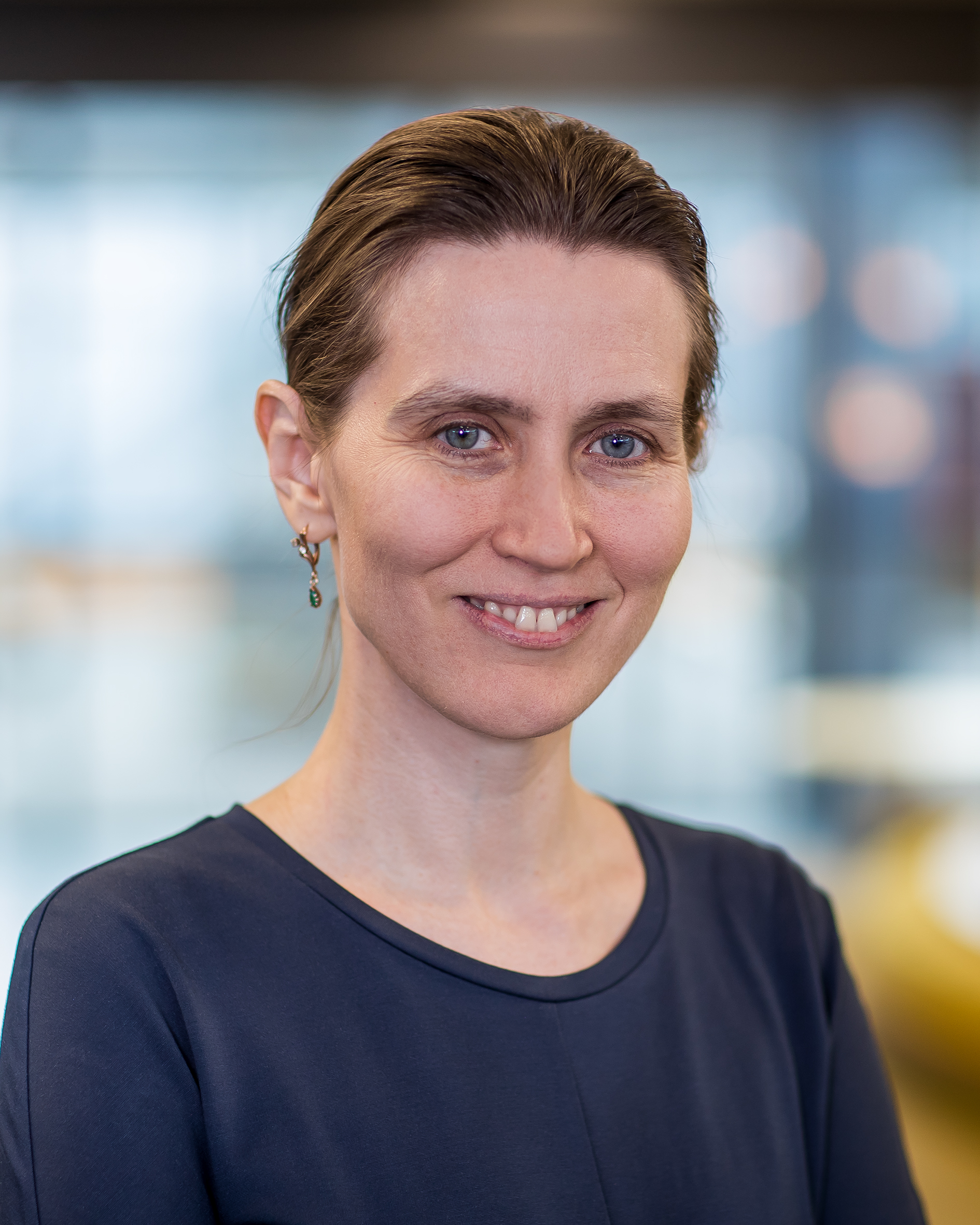
New PhD student: Lars Kudlik
On November 1st, 2026, Lars Kudlik started as a PhD student in the PA group. He will be working under the supervision of Gyunam Park. A big welcome to Lars!
Lars Kudlik is a Ph.D. student at Eindhoven University of Technology – Data Science Domain – Process Analytics cluster. He works under the supervision of Gyunam Park. Position: PhD Room: MF 7.117 Tel (internal): Links: External links: TU/e page Recent courses Recent presentations Recent projects Recent publications

Yvette van der Haas, Renata Medeiros de Carvalho and Boudewijn van Dongen have received the Best Paper Award at the HAIC (Human-AI Collaboration) workshop at the MICCAI 2026 conference with their paper titled “Why AI Fails to Influence Admission Decisions: Evidence from a Case Study“. Congratulations to Yvette, Renata and Boudewijn!

Mădălina Rogozan, Natalia Sidorova and Boudewijn van Dongen have received the Best Paper Award at the DS (Discovery Science) 2026 conference with their contribution titled “From Exceptional Subgroups to Hypotheses: A Contrastive Analysis Approach”. Congratulations to Mădălina, Natalia and Boudewijn!

Gyunam Park has received the Best Paper Award at the BPM 2026 conference with his contribution titled “Compiling Constraint Knowledge into Prescriptive Process Analytics via Neuro-symbolic Outcome Distillation”, which has appeared under the tile “Neuro-Symbolic Prescriptive Process Analytics: Learning Compliant and Effective Process Recommendations Through Constraint Distillation” in the proceedings of the conference. Congratulations to Read More …

van Gansewinkel, S., Denisov, V., & Fahland, D. (2026). An Object-Centric Approach to Inferring and Analyzing Queues. In I. van de Weerd, B. Estrada Torres, & H. van der Aa (Eds.), Business Process Management Workshops: BPM 2025 International Workshops, Seville, Spain, August 31–September 5, 2025, Revised Selected Papers (pp. 479-491). (Lecture Notes in Business Information Processing (LNBIP); Read More …

Swevels, A., Zerbato, F., & Fahland, D. (2026). Process Mining in Context: Extending Domain Data Models for Iterative Analysis. In L. Fuentes, P. Plebani, C. Combi, & H. Reijers (Eds.), Advanced Information Systems Engineering: 38th International Conference, CAiSE 2026, Verona, Italy, June 8–12, 2026, Proceedings (Vol. I, pp. 195-212). (Lecture Notes in Computer Science (LNCS); Vol. 16558). Read More …

Didden, L., Fahland, D., & Zerbato, F. (2026). Visually Retracing and Comparing Filter Steps in Exploratory Process Mining. In H. van der Aa, R. Guizzardi, S. Hacks, & L. Pufahl (Eds.), Enterprise, Business-Process and Information Systems Modeling: 27th International Conference, BPMDS 2026, and 31st International Conference, EMMSAD 2026, Verona, Italy, June 8–9, 2026, Proceedings (pp. 73-89). (Lecture Read More …

Objectives After taking the course, students are able to: Content Students learn how to plan, conduct and critically evaluate process intelligence projects in practice. They learn to follow research methodology to choose and combine appropriate techniques to generate and evaluate relevant insights from process logs and models. Students work on a challenge with a real-word Read More …

Objectives Non Bachelor Data Science wanting to register for this course should reach out to program management via mcs.academic.advisor.bds@tue.nl for formal approval After taking the course, students are able to Content Non Bachelor Data Science wanting to register for this course should reach out to program management via mcs.academic.advisor.bds@tue.nl for formal approval
Objectives The winter school will bring students together from different technical majors to work jointly on a business development process, where they learn to: Content The lecturing contents will include:

Objectives The main learning objective of FPM is to be able to understand the relation between sequential multi-variate event data and processes and, ultimately, to learn how to properly apply data science methods in the context of processes. Specifically, the following learning objectives are intended: to be able to identify challenges and requirements for using Read More …
General learning goals
Objectives After taking this course students should be able to: have a detailed understanding of the entire process mining spectrum and the methodology for process mining analysis
Objectives In this meeting the student gets insight into the study program.
Objectives In this meeting the student gets insight into the study program.
Objectives In this meeting the student gets insight into the study program.

Objectives This seminar combines teaching research methods (in preparation for a Master project) with providing students with recent and ongoing research in the area of event data analysis and process analysis. We study recent research articles, book chapters, and Master theses on topics along the entire analysis life-cycle. Through presentation and group discussions, we work Read More …

Objectives Non Bachelor Data Science wanting to register for this course should reach out to program management via mcs.academic.advisor.bds@tue.nl for formal approval After taking this course students should be able to independently: Content Non Bachelor Data Science wanting to register for this course should reach out to program management via mcs.academic.advisor.bds@tue.nl for formal approval The objective of Read More …

Objectives After taking this course students should: Content Data science is the profession of the future, because organizations that are unable to use (big) data in a smart way will not survive. It is not sufficient to focus on data storage and data analysis. The data scientist also needs to relate data to process analysis. Read More …
Objectives Acquire state-of-the-art scientific knowledge of a particular topic in the information systems domain. Typical topics are process modeling, workflow management, process mining, web services, service oriented architectures, language transformations, etc. Content People interested in the ‘process side’ of information systems can take the course ‘Capita selecta architecture of information systems’. This course will be Read More …
Sidorova, N., & Medeiros de Carvalho, R. (2026). Uncharted Workflows: Process Mining Perspectives in Health. In J. Mendling, S. Leemans, B. F. van Dongen, & H. Reijers (Eds.), Mining a Scientist’s Process: Essays Dedicated to Wil van der Aalst on the Occasion of His 60th Birthday (pp. 648-661). (Lecture Notes in Computer Science (LNCS); Vol. 16480). Read More …

Hassani, M., Verbeek, T., & van Straten, S. (2026). Chameleons do not Forget: Prompt-Based Online Continual Learning for Next Activity Prediction. arXiv.org. https://doi.org/10.48550/arXiv.2604.00653 Abstract Predictive process monitoring (PPM) focuses on predicting future process trajectories, including next activity predictions. This is crucial in dynamic environments where processes change or face uncertainty. However, current frameworks often assume Read More …

van Straten, S., Padella, A., & Hassani, M. (2026). Leveraging Data Augmentation and Siamese Learning for Predictive Process Monitoring. In C. Cappiello, O. Hartig, M. Sellami, & A. Ouni (Eds.), Cooperative Information Systems: 31st International Conference, CoopIS 2025, Marbella, Spain, October 20–22, 2025, Proceedings (pp. 70-87). (Lecture Notes in Computer Science (LNCS); Vol. 15535). Springer. https://doi.org/10.1007/978-3-032-15538-2_5 Abstract Read More …

Introduction Are you fascinated by understanding how complex, highly variable processes behave in the real world? Are you eager to develop new methods that push the boundaries of process mining research? Process mining research focuses on analyzing abstract objects—often referred to as cases—as they move through a system. These objects generate events, which typically serve Read More …
Mendling, J., Leemans, S. J. J., Dongen, van, B. F., & Reijers, H. A. (Eds.) (2026). Mining a Scientist’s Process: Essays Dedicated to Wil van der Aalst on the Occasion of His 60th Birthday. (Lecture Notes in Computer Science; Vol. 16480). Springer. https://doi.org/10.1007/978-3-032-17618-9

Are you fascinated by the intersection of probabilistic reasoning, process modelling, and artificial intelligence grounded in contextual knowledge? Do you want to develop AI agents that can autonomously reason, plan, and act in complex manufacturing environments based on knowledge graphs? Join a European research consortium and help shape the future of intelligent manufacturing. Job Description Read More …

Seidel, A., Weske, M., Montali, M., Rivkin, A., Reichert, M., van der Werf, J. M. E. M., van der Aalst, W. M. P., Breitmayer, M., Liss, L., van Detten, J. N., Jalali, A., Khayatbashi, S., König, M., Lichtenstein, T., Rinderle-Ma, S., Weber, B., Soffer, P., Rossi, L., Calegari Garcia, D., Delgado, A., Dijkman, R., Winkler, Read More …
Fahland, D., & Montali, M. (2026). What is an Object-Centric Case? An Exploration. In J. Mendling, S. Leemans, B. F. van Dongen, & H. Reijers (Eds.), Mining a Scientist’s Process: Essays Dedicated to Wil van der Aalst on the Occasion of His 60th Birthday (pp. 398-425). (Lecture Notes in Computer Science; Vol. 16480 LNCS). Springer. https://doi.org/10.1007/978-3-032-17618-9_28 Read More …

Mozafari Mehr, A. S., M. de Carvalho, R., & van Dongen, B. (2023). Explainable conformance checking: Understanding patterns of anomalous behavior. Engineering Applications of Artificial Intelligence, 126(Part B.), Article 106827. https://doi.org/10.1016/j.engappai.2023.106827 Abstract Anomaly detection in the execution of business processes in the organizations has a high level of complexity due to the consideration of various Read More …

Problem statement Important feedback on the quality status of Philips equipment in the field comes from customer complaints, software logs, service notes, and replaced parts. Millions of records are collected worldwide. To identify improvement opportunities, data is captured, monitored, and analysed. Philips has started using AI agents to make such data analysis more effective and Read More …

On March 1st, 2026, Nikos Perdikogiannis started as a PhD student in the PA group. He will be working under the supervision of Renata Medeiros de Carvalho, who could recruit a PhD student as a result of the Perseverance Award she received. A big welcome to Nikos!
Nikolaos (Nikos) Perdikogiannis is a Ph.D. student at Eindhoven University of Technology – Data Science Domain – Process Analytics cluster. He works under the supervision of Renata Medeiros de Carvalho. Position: PhD Room: MF 7.117 Tel (internal): Links: External links: TU/e page Recent courses Recent presentations Recent projects Recent publications

Biemans, B. C. M., Troubil, P., Grau, I., & Nuijten, W. P. M. (2025). Explainable Optimization: Leveraging Large Language Models for User-Friendly Explanations. In R. Guidotti, U. Schmid, & L. Longo (Eds.), Explainable Artificial Intelligence: Third World Conference, xAI 2025, Istanbul, Turkey, July 9–11, 2025, Proceedings (Vol. Part III, pp. 44-67). (Communications in Computer and Read More …

Overmeer, T., Janssen, T., & Nuijten, W. P. M. (2025). Revisiting Expected Possession Value in Football: Introducing a U-Net Architecture, Reward and Risk for Passes, and a Benchmark. In R. Arellano, P. Morouco, & C. Capelli (Eds.), Proceedings of the 13th International Conference on Sport Sciences Research and Technology Support, IcSPORTS 2025 (pp. 100-109). (International Read More …

On February 1st, 2026, Dip Ghosh started as a PhD student in the PA group. He will be working under the supervision of Wim Nuijten, A big welcome to Dip!
Dip Ghosh is a Ph.D. student at Eindhoven University of Technology – Data Science Domain – Process Analytics cluster. He works under the supervision of prof. dr. ir. Wim Nuijten. Position: PhD Room: Tel (internal): Links: External links: TU/e page Recent courses Recent presentations Recent projects Recent publications

Sommers, D., Sidorova, N., & van Dongen, B. (2026). In system alignments we trust! Explainable alignments via projections. Information Systems, 136, Article 102631. https://doi.org/10.1016/j.is.2025.102631 Abstract Alignments are a well-known process mining technique for reconciling system logs and normative process models. Evidence of certain behaviors in a real system may only be present in one representation Read More …
Sommers, D., Sidorova, N., & van Dongen, B. F. (2025). A Ground Truth Approach for Assessing Process Mining Techniques. arXiv.org. https://doi.org/10.48550/arXiv.2501.14345 Abstract The assessment of process mining techniques using real-life data is often compromised by the lack of ground truth knowledge, the presence of non-essential outliers in system behavior and recording errors in event logs. Read More …